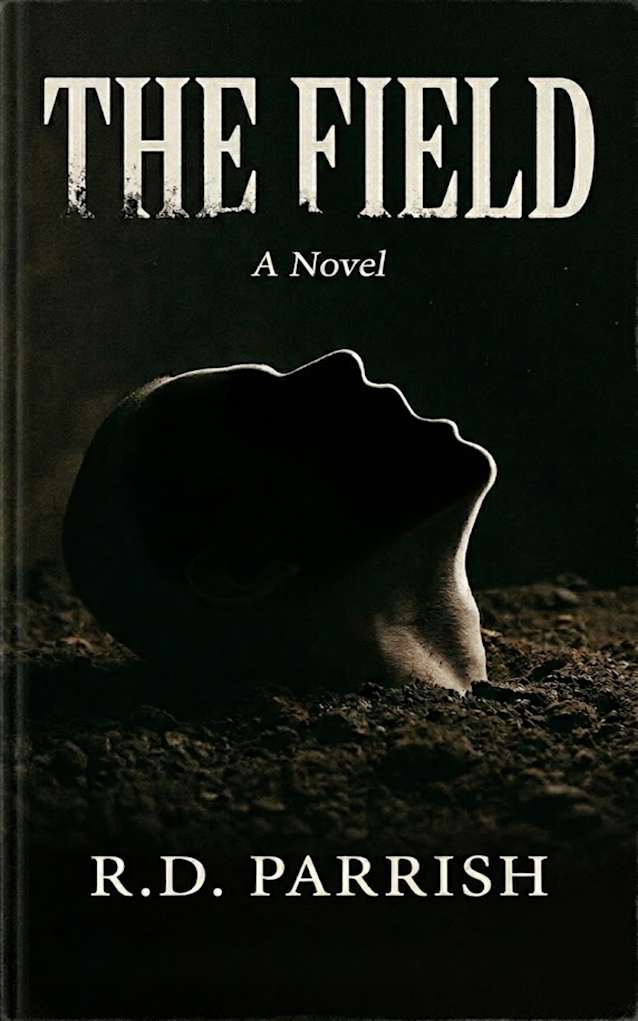
The Field: Unused does not always mean empty.
About
THE FIELD
Some ground should never be broken.
Four feet down, Evan Wallace’s shovel strikes something that shouldn’t exist.
Not rock. Not clay.
A barrier. Engineered. Deliberate. Sealed by people who knew that forgetting wasn’t weakness—it was survival.
Richard Moore doesn’t care. The funeral home is failing. The cemetery is full. The east tract looks empty, and empty land means profit. He orders the burials to continue.
That’s when the pressure begins.
Not in the mind—in the bones. A weight that doesn’t lift. Animals abandon the ridge. Neighbors turn on each other with fists and worse. Good people become capable of terrible things, and they don’t know why.
The soil compacts on its own.
Graves finish themselves.
And something beneath the membrane begins to respond.
Archaeologist Janet Rowe uncovers what the town spent centuries trying to erase: the east tract was never empty. It was contained.
Deliberately isolated from memory, ritual, and acknowledgment. Because the barrier wasn’t designed to hold something in—it was designed to keep the living from remembering.
From recognizing.
From feeding it.
But Richard Moore has broken the seal. Every casket lowered through the breach is an invitation. Every funeral is acknowledgment. And whatever lies beneath doesn’t forgive—it collects.
Now the debt is coming due.
The field doesn’t think. It doesn’t scheme. It doesn’t explain itself.
It only reacts.
And when containment fails, someone must pay the price.
For readers who crave Southern Gothic dread, supernatural horror rooted in human cruelty, and endings that don’t offer comfort—only consequence.