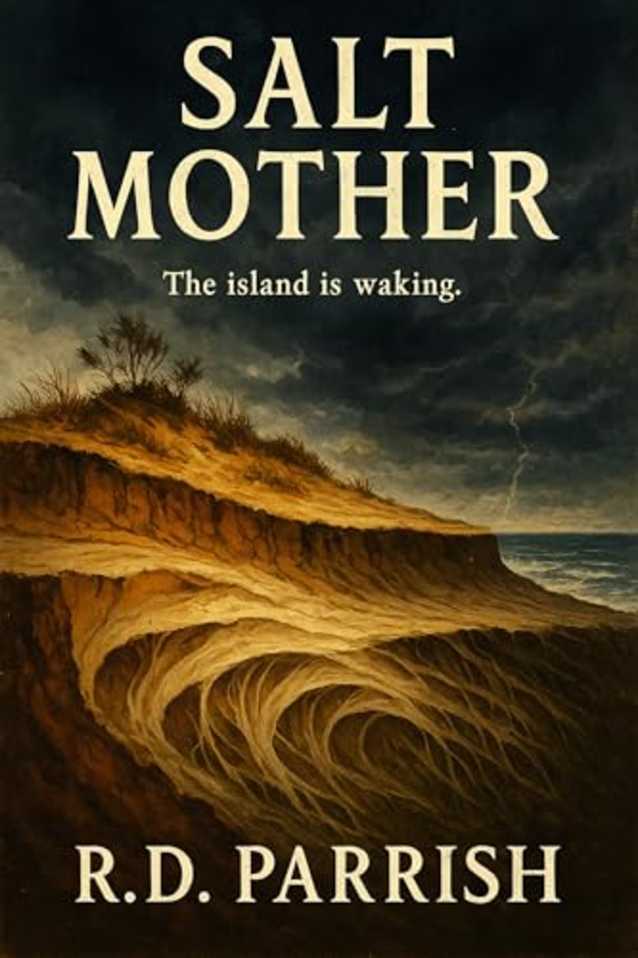
Salt Mother: The Island is Waking
About
SALT MOTHER
The island shouldn’t be warm.
Marine biologist Eliza Holt returns to Brackish Key to settle her mother’s estate. The barrier island should be quiet—tourists gone, storm season over.
Instead, the sand holds heat overnight. The tide moves wrong. Organisms wash ashore in stages of impossible change—tissues dissolving and rebuilding at the same time.
Her mother’s recordings offer no comfort:
“It was never just land. And we’re running out of time.”
When fissures open and vent warm fluid, Eliza realizes the island is responding to something. Pressure cycles. Internal rhythms. Restructuring from beneath.
Then the holiday tourists arrive.
Translucent organisms emerge from the fissures—silent, methodical, focused. They don’t attack. They repair damage. Seal roads. Block access to unstable zones.
Until evacuation begins.
Boats destabilize. Docks collapse. Anyone who interferes is immobilized and drawn inward. Not eaten. Not killed.
Repurposed.
The island isn’t waking. It’s finishing something that started long before humans built houses on it. And when the process completes, Brackish Key will vanish as cleanly as if it never existed.
Eliza has one chance to understand what her mother discovered too late:
Some ground was never meant to hold weight.
Coastal body horror for readers who crave Annihilation’s biological dread and The Ruins’ tightening trap. The island doesn’t explain itself. It just completes.